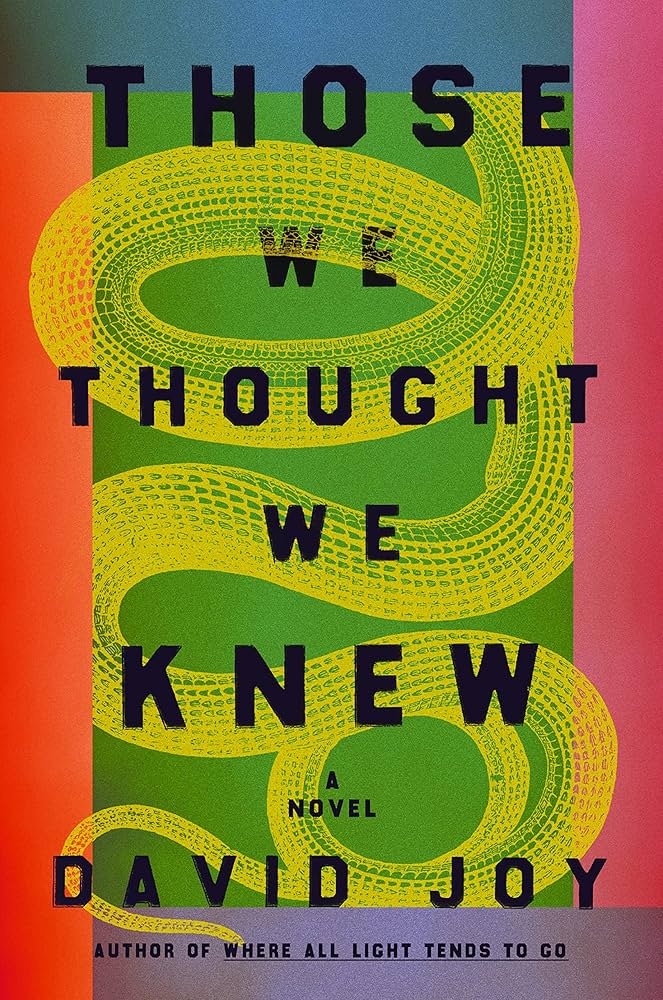
“Those We Thought We Knew” by David Joy

*SPOILERS* Don’t read on if you haven’t read the book.

Also, this post might not make sense if you haven’t yet read the book.

I just finished “Those We Thought We Knew” by David Joy. I’m not going to lie, when I was first reading, I sarcastically started to think, “Oh yay, some dark Appalchian dude lit, I can’t wait to get into this.” With everything that was happening politically, I wasn’t sure if my mental health could handle it. But I wanted to be harder on myself this year and accomplish my goals. Read more Applachian and Latine literature. Finish one book per week. Have some discipline. So I kept up with it, and I’m glad that I did.

The main reason I am glad that I kept reading is because the author understood the assignment: Racism is more pernicious and deep than white people usually care to think about. It’s not an easy thing to examine, because it’s difficult. And it’s real. And it’s everywhere. White people in general are very comfortable ignoring it. As one of the main characters says, “But I’ve got news for you, that shit’s as American as Bud Light and baseball games.”

As a white person, I have been lied to my whole life about these issues. Growing up, I was taught about history’s heroes only to find out later, they weren’t really heroes. Our founding fathers were mostly slave-owners and rapists and cared more about maintaining their fortunes than about doing what was actually right. I’m still mad about it. Because we actually do have heroes in our history and they were the ones that stood up to those people. Not that we actually learn about those people that much in school. When I finally read Zinn’s People’s History of the United States in high school, that’s when I actually started to learn something. I’m American, so Black History is my history. That’s what I want to learn about.

Back to the book. In this story, the roots of the Ku Klux Klan in a small town are uncovered when a Deputy police man, Ernie Allison, sees some information that he wasn’t meant to see, mainly names of local Klan members. He pays the price for speaking up about it, getting beat up and almost dying. At the same time, an artist, Toya Gardner, comes back to that same place, which is her mother’s hometown in North Carolina, to make art that exposes the racism that has always been there. Her art causes protests. She is killed. As readers, we are following two threads: Did the Klan beat up Ernie Allision and who are they? Who killed Toya Gardner? And while these are interesting questions to follow plot-wise, the stories around it that show how people react when they are finally forced to confront racism are the most compelling.

You watch Detective Leah Green really wrestle with these questions when she goes to talk to Reverend Tillman, who is in the process of getting more media attention for the death of Toya Gardner. Detective Green wants to know, why involve more people and shine national attention on their hometown? In her opinion, it’s not going to help her get the small town people to talk and eventually solve the case of who murdered Toya Gardner. She asks, why disturb the peace of this town further? And Reverend Tillman answers her eloquently. What peace? Peace for whom? Why does it take a Black woman having to be murdered to have productive conversations about racism in their town? And in her shame, Detective Green realizes that he is right. She has been complicit in the lie that there ever was peace there the whole time.

The ending breaks your heart. Toya’s grandmother living through all the betrayal and still not being able to leave the mountain, her home.

My poetry teacher, Rebecca Howell, taught me to write poetry by teaching me that you are just trying to tell the truth. Get as close as you can to the truth, throw everything else out, and that’s when your words will start to make sense in the way that only poetry can make sense. It’s hard to do. We are so influenced by what others say and how we have been socialized to live in this world. We have been told what to pay attention to and what to ignore and that kind of conditioning goes deep. I liked this novel because David Joy set out to tell the truth as best as he could and I appreciated his efforts. He’s right. What people do and fail to do, notice and fail to notice, makes them complicit to racism in all sorts of ways and it’s worth examining if we are ever going to be able to move on from it. Will we? I don’t even know if it’s possible. But we need to be having more conversations like this and I pray to God or the Universe or whoever that less people have to suffer or die in order to have those real conversations. This book is definitely worth a read. Give it to the people who want to ignore our past in the United States, who sit there comfortably and don’t want to take it on. Encourage them to read until the end, and have a conversation. That’s what I am going to try to do.

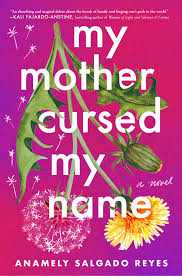
“My Mother Cursed My Name” by Anamely Salgado Reyes

In this book, generations of women are cursed for their life’s meaning to be the opposite of their names. I’m not going to lie, it took me a while to not be confused by this. The three main character’s names are Olvido, Angustias, and Felicitas. Angustias was not a mean person, she just didn’t understand the power of names for women in her family.

This was a pretty story. The characters reminded me a bit of the Disney movie, “Encanto,” because each woman has a special power. Olvido is an excellent cook, and whoever eats her food will spill their secrets. Angustias can see people’s feelings and Felicitas can see… dead people. The book begins with Olvido’s death, which is also the beginning of her relationship with Felicitas. The dialogue in this book was fun to read; I enjoyed Felicitas’ sarcasm and dark side the most. I was really rooting for her in the end and I’m glad that all of them resolved the issues each of them had with their own respective mothers.

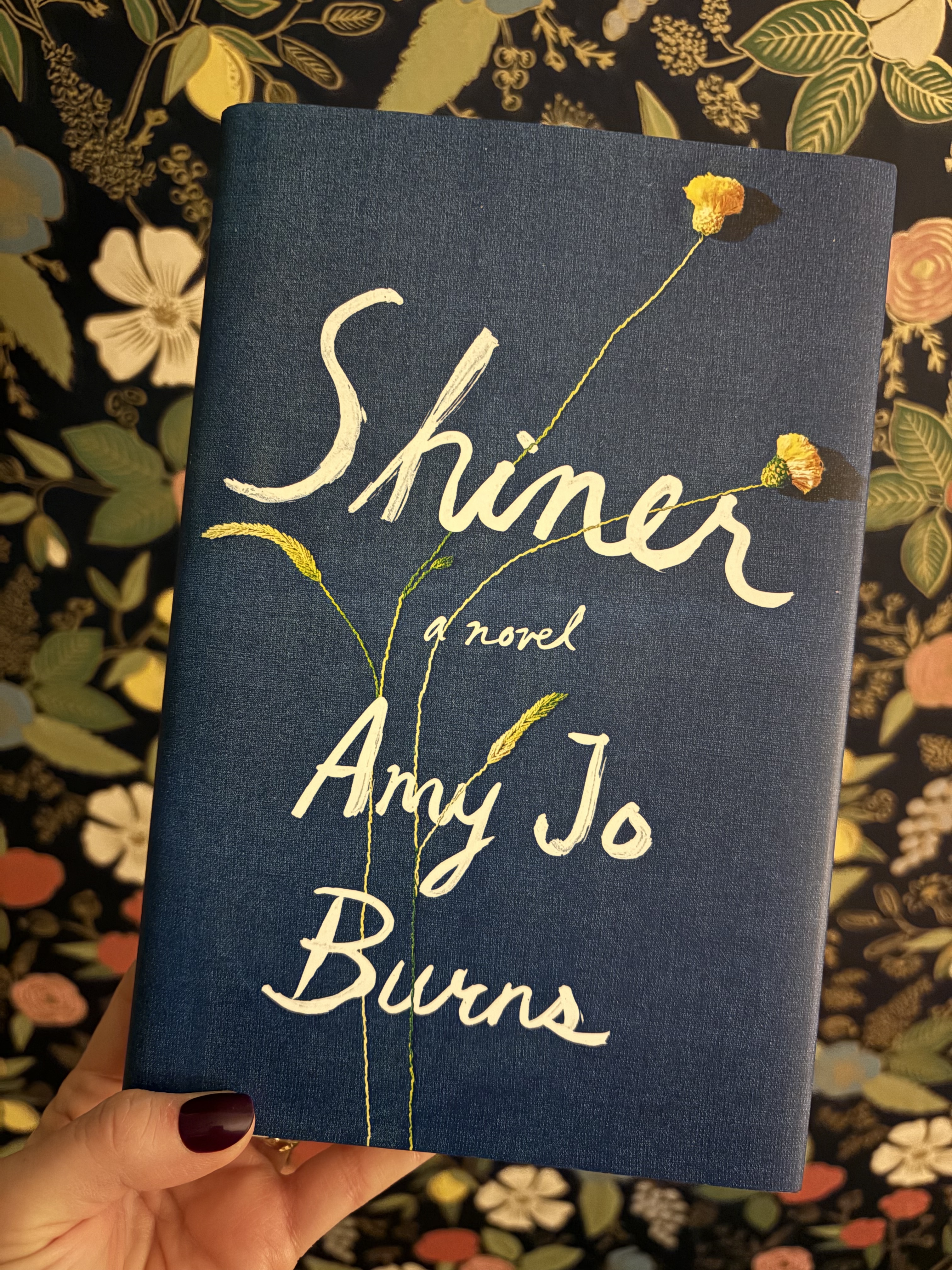
“Shiner” by Amy Jo Burns

(FYI: There are spoilers in this post.)

This past November I went back to Hindman for a Winter Writers Retreat. I drove over to the Read Spotted Newt in Hazard with a group, and while we were inside I pulled this one from the shelf. I think the deep cobalt blue of the cover called to me. I already had too many unread books that I needed to read, so I was willing myself to browse, but not buy another book. But then I opened this one and read the first and last lines of the prologue:

“Making good moonshine isn’t that different from telling a good story, and no one tells a story like a woman.”

“Stories, like bottles of shine, are meant to be given away.”

I tucked this under my arm and walked to the cash register, reaching for my wallet in my coat pocket. I was so happy. I had yet another story I couldn’t wait to read.

This book was full of lines like that, so simple in execution yet so profound. And it is a book of stories, divided in parts based on the main characters’ differing perspectives of their lives on the mountain near Trap, West Virginia.

Because of the prologue, entitled “True Story,” and the title of the book, “Shiner,” I expected the theme of making moonshine to be the first thing I read about as soon as I opened the book, but as I started to read, I realized that that was too literal of an expectation. The book begins and ends with Wren’s perspective, the daughter of Ruby Day and Briar Bird. Briar is a snake handler and preacher, struck by lightning in his youth and spreading his story and version of God’s message in an abandoned gas station to the mountain faithful every Sunday. But he has his own secrets to hide. Ruby is Wren’s mother, and she gets her own part of the book, as well as her best friend, Ivy.

Ruby and Ivy are best friends, have similar hopes and dreams as they grow up together, and also need each other to survive life on the mountain. Theirs is a story of living through trauma and under the control of men, whether it is their fathers or their husbands. Ivy has such a cynical perspective on life, and it is no wonder after you slowly discover what she has been through. Ruby is similar, though she has her bursts of hope. Unfortunately, they do not serve her and they come back to bite her in the end. (I am no coward; I intend my puns.) And along with them, growing up on the mountain, is Flynn Sherrod, a moonshiner and tragic character, tangled up in it all with Ruby, Ivy, and Briar.

Flynn was probably my favorite character, even though in many ways he was the most sad. I keep going back to the way he described moonshine.

“Flynn loved his whiskey so much that he shied away from describing its flavor… Folks didn’t want details as much as they wanted to be told a story. And Flynn packed a tale in every bottle– the same story, in fact… ‘It tastes like heartbreak at midnight,’ he’d say. Or, ‘Like kissing your best friend’s girl.'”

Despite the heartache and the tragedy, I loved the ending of this book and the final message for sweet Wren Bird, who had to live through it all. You can rise out of the darkness; you can tell your own story.

Amy Jo Burns wrote a beautiful story and I am so grateful that I got to read it. I love stories so much. This book recognizes their importance in our lives and it was a joy to read. I’ll be recommending it to everyone. Have you read it? What stood out to you?

A Book Feast

Before I get into these book reviews, I want to write a disclaimer of sorts. I am not going to “rate” books on this site. I love reading stories and while some are more successful than others, I love all different types and it would be unfair to compare them when they achieve completely different goals for me. When I read works from an author like Wendell Berry, it can feel like I am eating a delicious, filling, and nutrient-packed meal. Other books are like cotton candy. Cotton Candy is great! I’m never going to malign cotton candy. But I might talk about the other meal more, revisit it in my mind, and maybe try to have it again or share it with friends. Some books are like amazing meal plus dessert. Those are my favorite kind. I like reading literary fiction but sometimes I prefer when it when it has some plot twists or mystery added in. Is that low brow? I don’t know. And at this stage in my life I don’t care. I like what I like and I want to stop overthinking it.

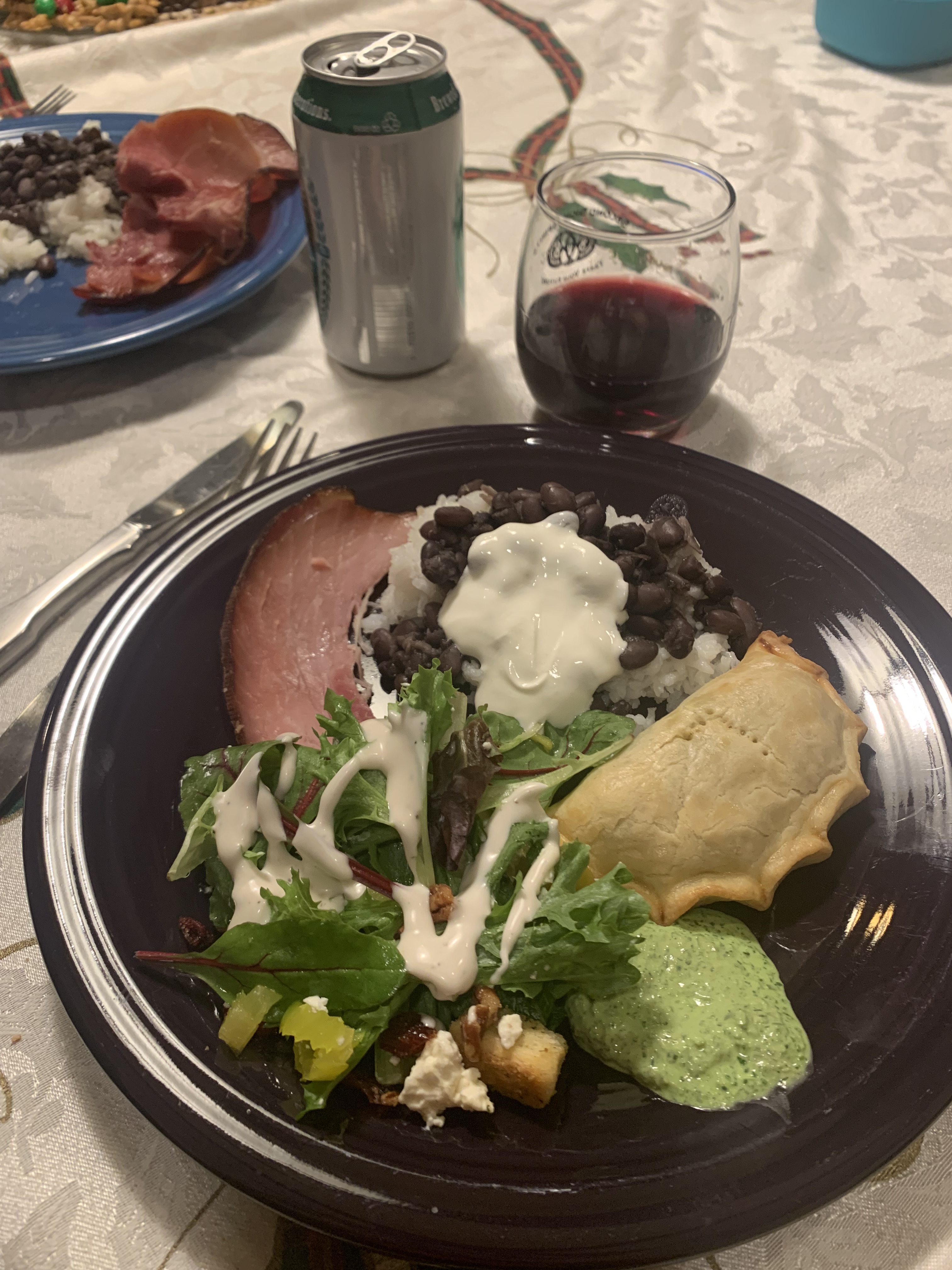
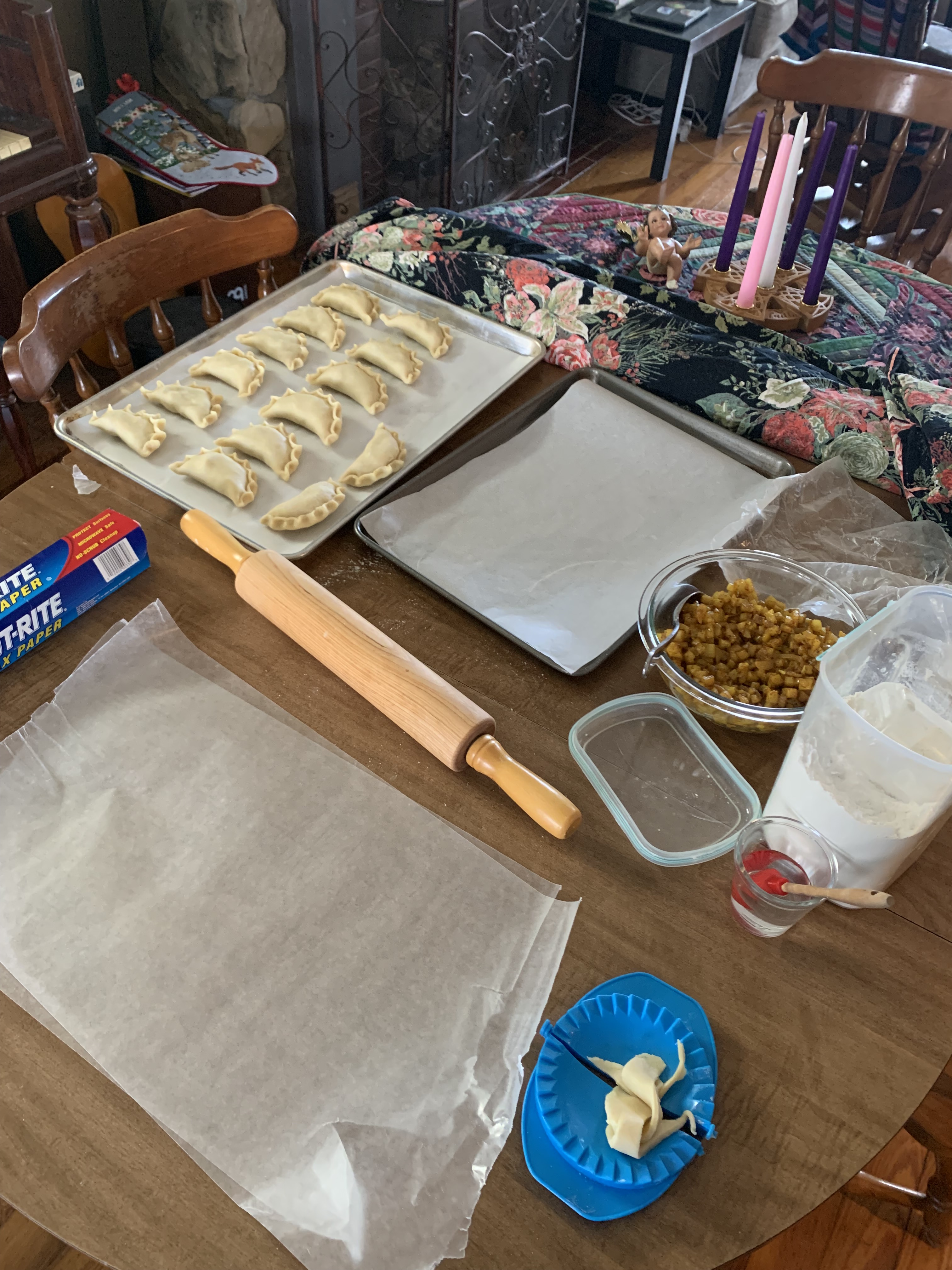
Above is a picture of our meal this past year from Nochebuena, or Christmas Eve. We had ham, a salad with ranch dressing, empanadas I made from scratch, one with a lechón filling and another with a potato filling I made, almost like a samosa, and classic Cuban arroz con frijoles negros, with crema on top like my mom used to have when she lived in Honduras. I also made a really spicy sauce to dip the empanadas in, with cilantro, spinach, serrano peppers, and sour cream. The meal makes no sense, but I assure you, it is so good. It is an amalgamation of the influences in my life. I also had a decent but inexpensive wine to wash it all down with.

Looking at that meal, I realize what I consider good food reflects my taste in books. It’s a mix of everything, but it’s not too fancy.

As an aspiring author, I’m striving to write something good like the meal I just described. As a reader, I’ll try anything, and I like so many different kinds of foods. These book reviews I plan to do on here are like index cards in a recipe box of my ongoing book feast, so I can remember what I ate, and share it with other people too.

First blog post

Today is the first day of the new year, January 1st, 2025. I love making resolutions. One of my favorite songs is City by Thao and the Get Down Stay Down has a lyric that I love:
“Rest and be strong, wash and be clean Start a new year whenever you need”
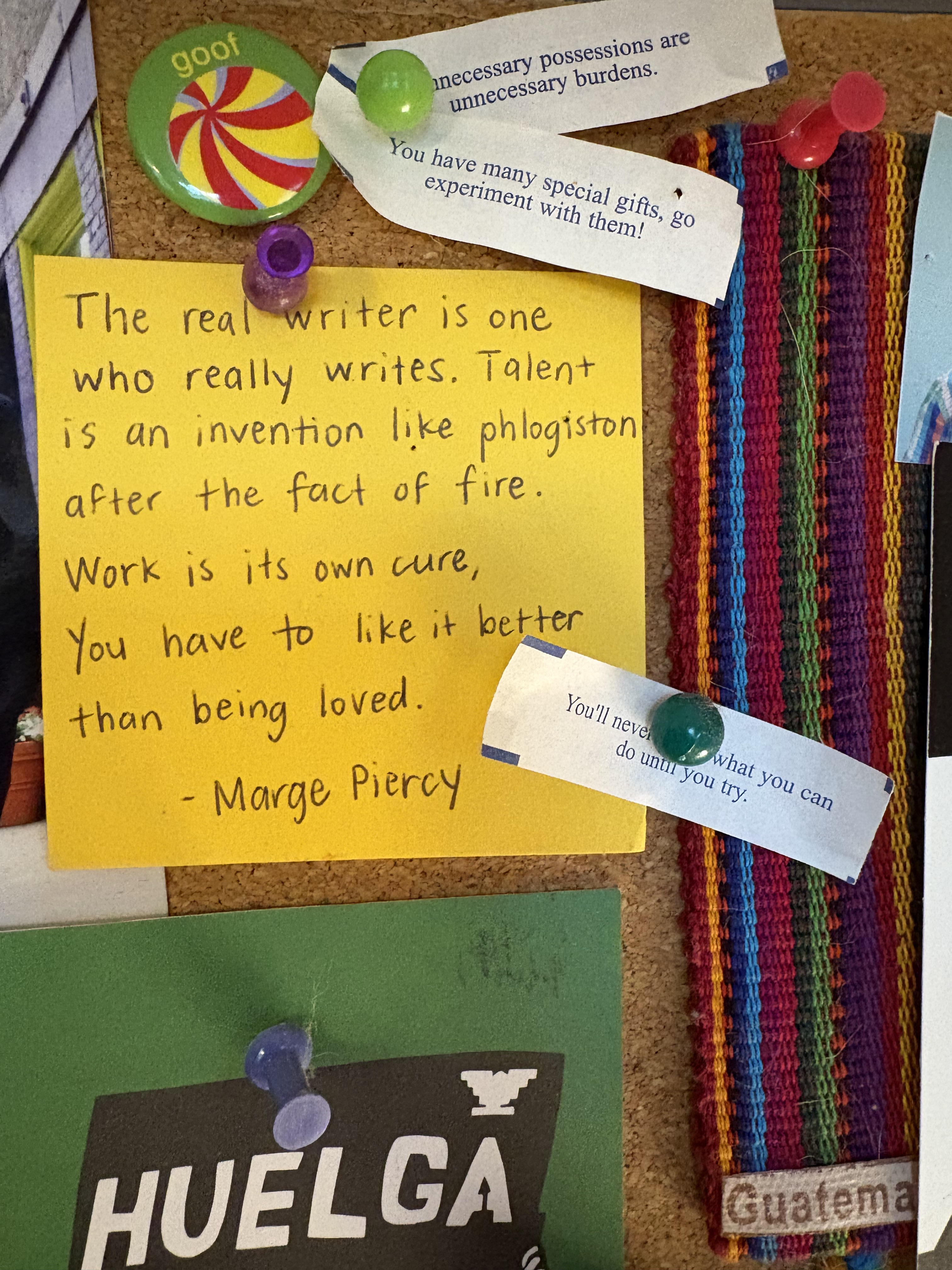
I feel like I start a “new year” all the time, but starting one at the actual beginning of the new year does feel special. I have a lot of goals, which mostly have to do with staying healthy, reading, and writing. The purpose of this blog, for me, is to keep writing. As I type, I am looking at this reminder, from the poem “For The Young Who Want To” by Marge Piercy. (Not that I am super young. Young at heart!)
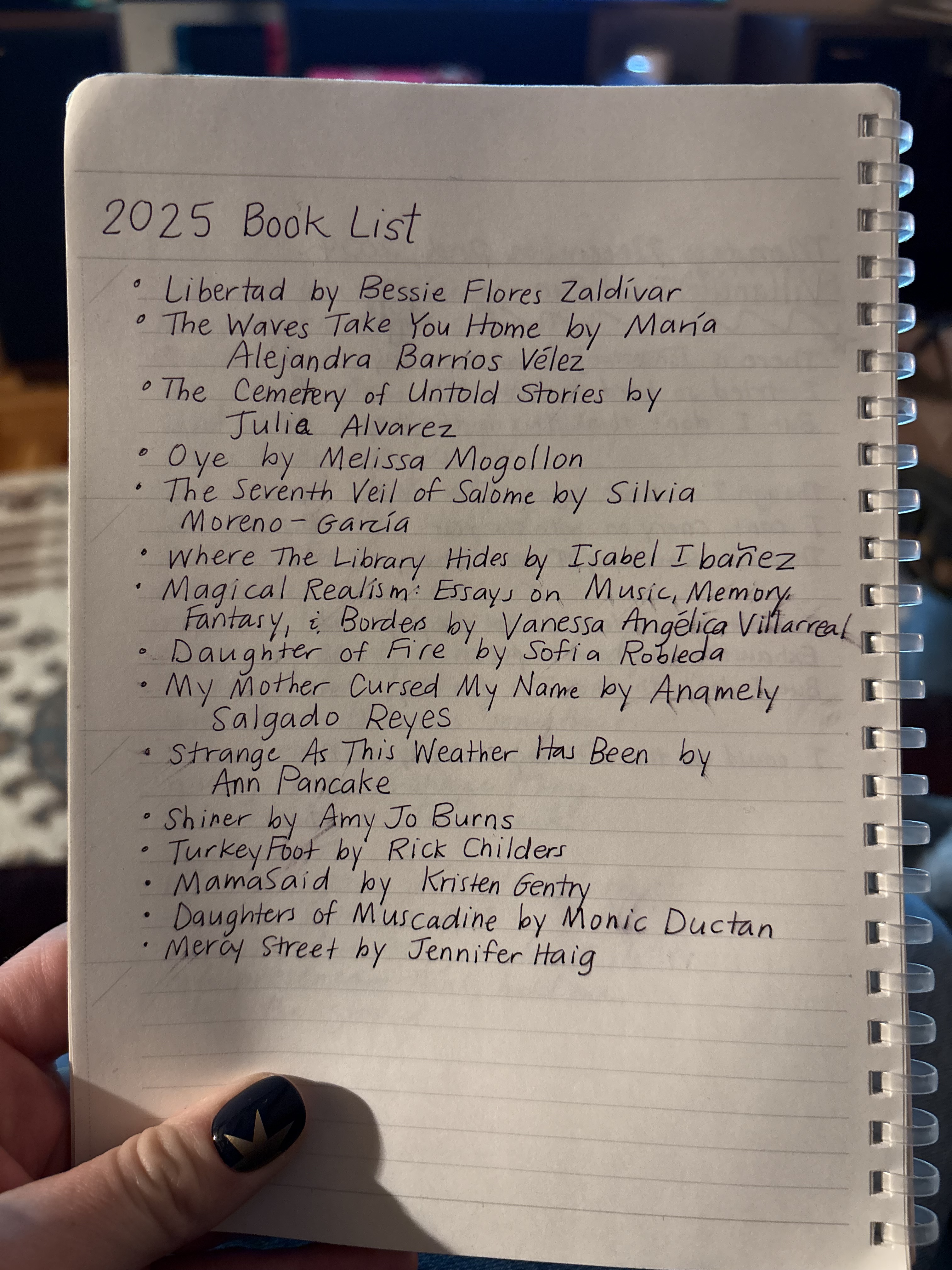
I am currently working on a novel and some poems. I want to update this blog weekly with book reviews and general thoughts and motivations. Here is a book list I made of books that I want to start off with reading this year:
Cheers to a New Year, health for everyone, and lots of reading and writing.✨