
*SPOILERS* Don’t read on if you haven’t read the book.
Also, this post might not make sense if you haven’t yet read the book.
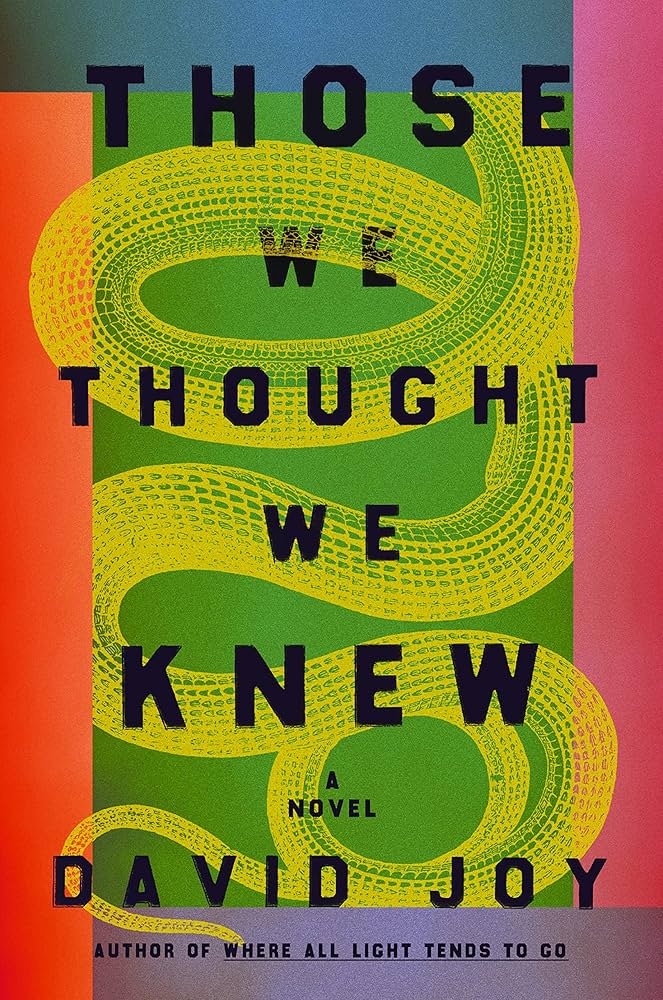
I just finished “Those We Thought We Knew” by David Joy. I’m not going to lie, when I was first reading, I sarcastically started to think, “Oh yay, some dark Appalchian dude lit, I can’t wait to get into this.” With everything that was happening politically, I wasn’t sure if my mental health could handle it. But I wanted to be harder on myself this year and accomplish my goals. Read more Applachian and Latine literature. Finish one book per week. Have some discipline. So I kept up with it, and I’m glad that I did.
The main reason I am glad that I kept reading is because the author understood the assignment: Racism is more pernicious and deep than white people usually care to think about. It’s not an easy thing to examine, because it’s difficult. And it’s real. And it’s everywhere. White people in general are very comfortable ignoring it. As one of the main characters says, “But I’ve got news for you, that shit’s as American as Bud Light and baseball games.”
As a white person, I have been lied to my whole life about these issues. Growing up, I was taught about history’s heroes only to find out later, they weren’t really heroes. Our founding fathers were mostly slave-owners and rapists and cared more about maintaining their fortunes than about doing what was actually right. I’m still mad about it. Because we actually do have heroes in our history and they were the ones that stood up to those people. Not that we actually learn about those people that much in school. When I finally read Zinn’s People’s History of the United States in high school, that’s when I actually started to learn something. I’m American, so Black History is my history. That’s what I want to learn about.
Back to the book. In this story, the roots of the Ku Klux Klan in a small town are uncovered when a Deputy police man, Ernie Allison, sees some information that he wasn’t meant to see, mainly names of local Klan members. He pays the price for speaking up about it, getting beat up and almost dying. At the same time, an artist, Toya Gardner, comes back to that same place, which is her mother’s hometown in North Carolina, to make art that exposes the racism that has always been there. Her art causes protests. She is killed. As readers, we are following two threads: Did the Klan beat up Ernie Allision and who are they? Who killed Toya Gardner? And while these are interesting questions to follow plot-wise, the stories around it that show how people react when they are finally forced to confront racism are the most compelling.
You watch Detective Leah Green really wrestle with these questions when she goes to talk to Reverend Tillman, who is in the process of getting more media attention for the death of Toya Gardner. Detective Green wants to know, why involve more people and shine national attention on their hometown? In her opinion, it’s not going to help her get the small town people to talk and eventually solve the case of who murdered Toya Gardner. She asks, why disturb the peace of this town further? And Reverend Tillman answers her eloquently. What peace? Peace for whom? Why does it take a Black woman having to be murdered to have productive conversations about racism in their town? And in her shame, Detective Green realizes that he is right. She has been complicit in the lie that there ever was peace there the whole time.
The ending breaks your heart. Toya’s grandmother living through all the betrayal and still not being able to leave the mountain, her home.
My poetry teacher, Rebecca Howell, taught me to write poetry by teaching me that you are just trying to tell the truth. Get as close as you can to the truth, throw everything else out, and that’s when your words will start to make sense in the way that only poetry can make sense. It’s hard to do. We are so influenced by what others say and how we have been socialized to live in this world. We have been told what to pay attention to and what to ignore and that kind of conditioning goes deep. I liked this novel because David Joy set out to tell the truth as best as he could and I appreciated his efforts. He’s right. What people do and fail to do, notice and fail to notice, makes them complicit to racism in all sorts of ways and it’s worth examining if we are ever going to be able to move on from it. Will we? I don’t even know if it’s possible. But we need to be having more conversations like this and I pray to God or the Universe or whoever that less people have to suffer or die in order to have those real conversations. This book is definitely worth a read. Give it to the people who want to ignore our past in the United States, who sit there comfortably and don’t want to take it on. Encourage them to read until the end, and have a conversation. That’s what I am going to try to do.
 Silvia Gisela