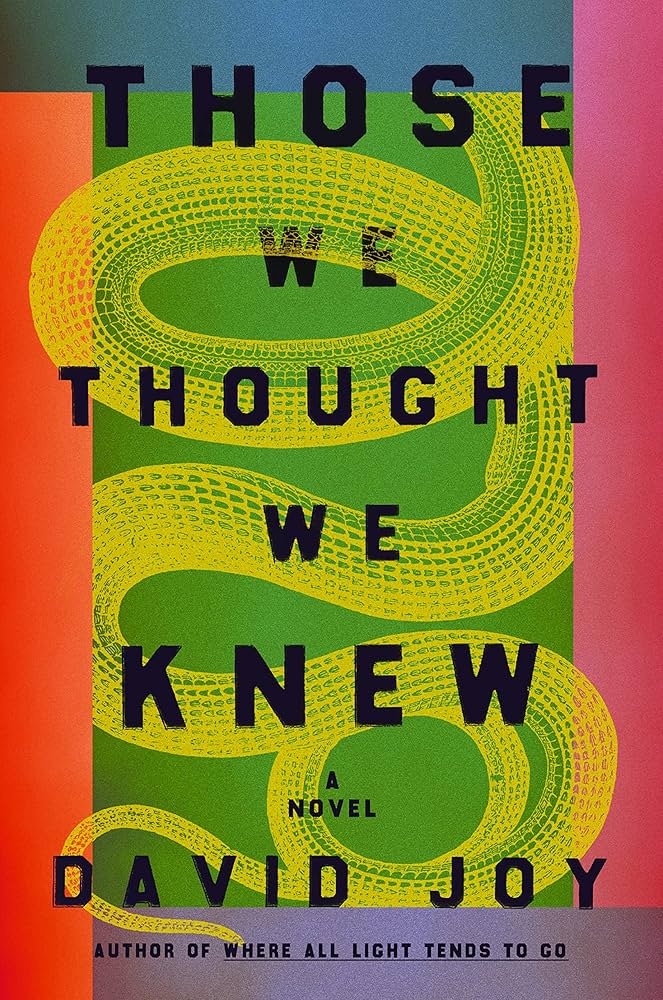
“Those We Thought We Knew” by David Joy

*SPOILERS* Don’t read on if you haven’t read the book.

Also, this post might not make sense if you haven’t yet read the book.

I just finished “Those We Thought We Knew” by David Joy. I’m not going to lie, when I was first reading, I sarcastically started to think, “Oh yay, some dark Appalchian dude lit, I can’t wait to get into this.” With everything that was happening politically, I wasn’t sure if my mental health could handle it. But I wanted to be harder on myself this year and accomplish my goals. Read more Applachian and Latine literature. Finish one book per week. Have some discipline. So I kept up with it, and I’m glad that I did.

The main reason I am glad that I kept reading is because the author understood the assignment: Racism is more pernicious and deep than white people usually care to think about. It’s not an easy thing to examine, because it’s difficult. And it’s real. And it’s everywhere. White people in general are very comfortable ignoring it. As one of the main characters says, “But I’ve got news for you, that shit’s as American as Bud Light and baseball games.”

As a white person, I have been lied to my whole life about these issues. Growing up, I was taught about history’s heroes only to find out later, they weren’t really heroes. Our founding fathers were mostly slave-owners and rapists and cared more about maintaining their fortunes than about doing what was actually right. I’m still mad about it. Because we actually do have heroes in our history and they were the ones that stood up to those people. Not that we actually learn about those people that much in school. When I finally read Zinn’s People’s History of the United States in high school, that’s when I actually started to learn something. I’m American, so Black History is my history. That’s what I want to learn about.

Back to the book. In this story, the roots of the Ku Klux Klan in a small town are uncovered when a Deputy police man, Ernie Allison, sees some information that he wasn’t meant to see, mainly names of local Klan members. He pays the price for speaking up about it, getting beat up and almost dying. At the same time, an artist, Toya Gardner, comes back to that same place, which is her mother’s hometown in North Carolina, to make art that exposes the racism that has always been there. Her art causes protests. She is killed. As readers, we are following two threads: Did the Klan beat up Ernie Allision and who are they? Who killed Toya Gardner? And while these are interesting questions to follow plot-wise, the stories around it that show how people react when they are finally forced to confront racism are the most compelling.

You watch Detective Leah Green really wrestle with these questions when she goes to talk to Reverend Tillman, who is in the process of getting more media attention for the death of Toya Gardner. Detective Green wants to know, why involve more people and shine national attention on their hometown? In her opinion, it’s not going to help her get the small town people to talk and eventually solve the case of who murdered Toya Gardner. She asks, why disturb the peace of this town further? And Reverend Tillman answers her eloquently. What peace? Peace for whom? Why does it take a Black woman having to be murdered to have productive conversations about racism in their town? And in her shame, Detective Green realizes that he is right. She has been complicit in the lie that there ever was peace there the whole time.

The ending breaks your heart. Toya’s grandmother living through all the betrayal and still not being able to leave the mountain, her home.

My poetry teacher, Rebecca Howell, taught me to write poetry by teaching me that you are just trying to tell the truth. Get as close as you can to the truth, throw everything else out, and that’s when your words will start to make sense in the way that only poetry can make sense. It’s hard to do. We are so influenced by what others say and how we have been socialized to live in this world. We have been told what to pay attention to and what to ignore and that kind of conditioning goes deep. I liked this novel because David Joy set out to tell the truth as best as he could and I appreciated his efforts. He’s right. What people do and fail to do, notice and fail to notice, makes them complicit to racism in all sorts of ways and it’s worth examining if we are ever going to be able to move on from it. Will we? I don’t even know if it’s possible. But we need to be having more conversations like this and I pray to God or the Universe or whoever that less people have to suffer or die in order to have those real conversations. This book is definitely worth a read. Give it to the people who want to ignore our past in the United States, who sit there comfortably and don’t want to take it on. Encourage them to read until the end, and have a conversation. That’s what I am going to try to do.

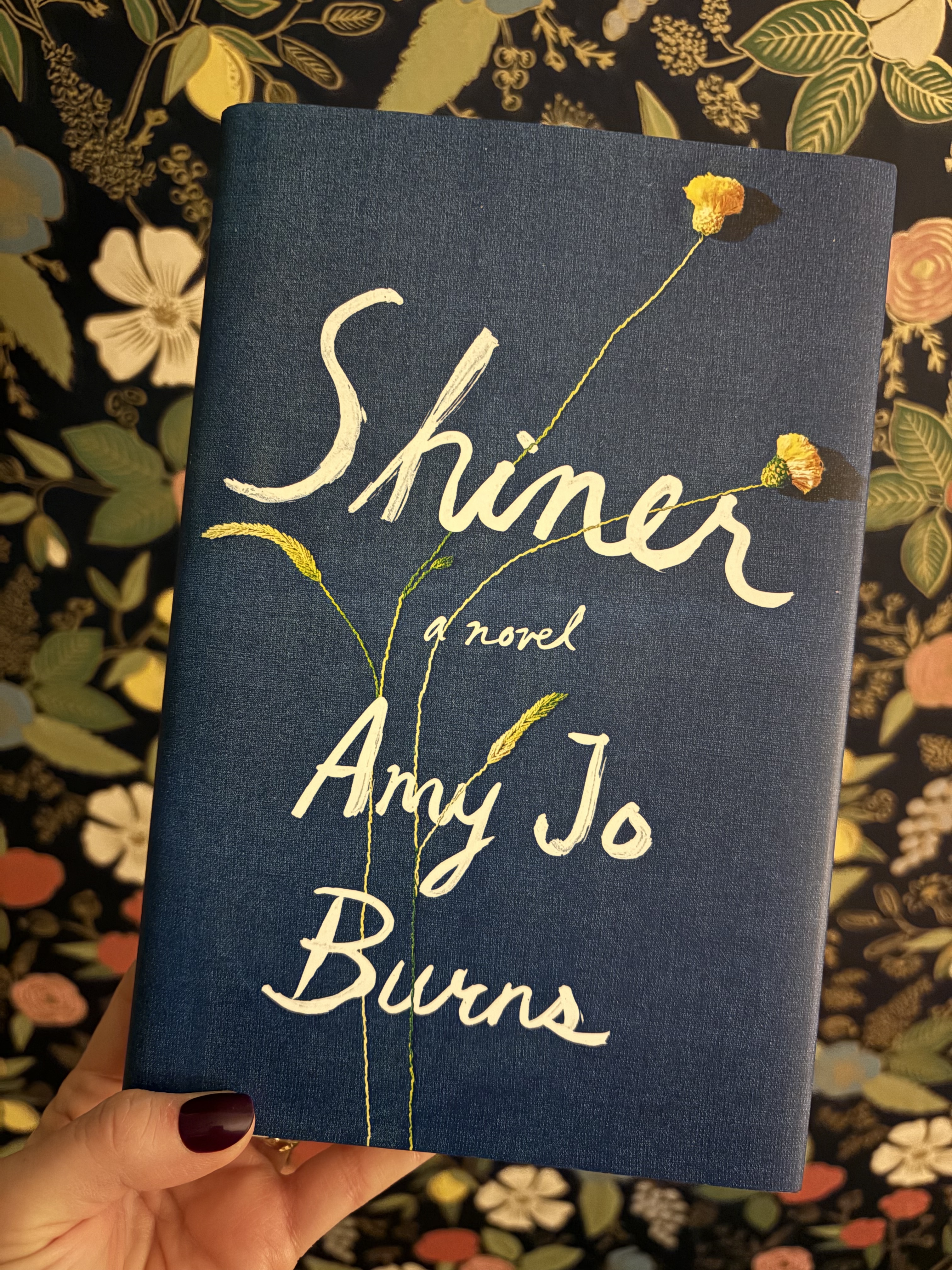
“Shiner” by Amy Jo Burns

(FYI: There are spoilers in this post.)

This past November I went back to Hindman for a Winter Writers Retreat. I drove over to the Read Spotted Newt in Hazard with a group, and while we were inside I pulled this one from the shelf. I think the deep cobalt blue of the cover called to me. I already had too many unread books that I needed to read, so I was willing myself to browse, but not buy another book. But then I opened this one and read the first and last lines of the prologue:

“Making good moonshine isn’t that different from telling a good story, and no one tells a story like a woman.”

“Stories, like bottles of shine, are meant to be given away.”

I tucked this under my arm and walked to the cash register, reaching for my wallet in my coat pocket. I was so happy. I had yet another story I couldn’t wait to read.

This book was full of lines like that, so simple in execution yet so profound. And it is a book of stories, divided in parts based on the main characters’ differing perspectives of their lives on the mountain near Trap, West Virginia.

Because of the prologue, entitled “True Story,” and the title of the book, “Shiner,” I expected the theme of making moonshine to be the first thing I read about as soon as I opened the book, but as I started to read, I realized that that was too literal of an expectation. The book begins and ends with Wren’s perspective, the daughter of Ruby Day and Briar Bird. Briar is a snake handler and preacher, struck by lightning in his youth and spreading his story and version of God’s message in an abandoned gas station to the mountain faithful every Sunday. But he has his own secrets to hide. Ruby is Wren’s mother, and she gets her own part of the book, as well as her best friend, Ivy.

Ruby and Ivy are best friends, have similar hopes and dreams as they grow up together, and also need each other to survive life on the mountain. Theirs is a story of living through trauma and under the control of men, whether it is their fathers or their husbands. Ivy has such a cynical perspective on life, and it is no wonder after you slowly discover what she has been through. Ruby is similar, though she has her bursts of hope. Unfortunately, they do not serve her and they come back to bite her in the end. (I am no coward; I intend my puns.) And along with them, growing up on the mountain, is Flynn Sherrod, a moonshiner and tragic character, tangled up in it all with Ruby, Ivy, and Briar.

Flynn was probably my favorite character, even though in many ways he was the most sad. I keep going back to the way he described moonshine.

“Flynn loved his whiskey so much that he shied away from describing its flavor… Folks didn’t want details as much as they wanted to be told a story. And Flynn packed a tale in every bottle– the same story, in fact… ‘It tastes like heartbreak at midnight,’ he’d say. Or, ‘Like kissing your best friend’s girl.'”

Despite the heartache and the tragedy, I loved the ending of this book and the final message for sweet Wren Bird, who had to live through it all. You can rise out of the darkness; you can tell your own story.

Amy Jo Burns wrote a beautiful story and I am so grateful that I got to read it. I love stories so much. This book recognizes their importance in our lives and it was a joy to read. I’ll be recommending it to everyone. Have you read it? What stood out to you?

“Libertad” by Bessie Flores Zaldívar

I was lucky enough to have time off (snowstorm, school canceled) to read this book, “Libertad” by Bessie Flores Zaldívar, because I couldn’t put it down. You can’t fake real and this novel was real. It’s also hard to make me cry, but this story did that too. Thank you, Bessie Flores Zaldívar, for writing this novel. 

The main characters in this book are teenagers so this book is classified as Young Adult, but this coming-of-age story is enjoyable to read as an adult. The reader gets to follow Libertad for about a year as she is trying to navigate what she wants for herself and deciding who she is, and how that affects her relationship with her friends and family members. When the story begins, she is 17 years old, living with her Abuela, Mami, and 2 brothers, during the political unrest of the 2017 presidential election in Honduras. This isn’t just a backdrop to the story, it’s an essential part of navigating her school, friend, romantic, and familial relationships. 

Having complicated feelings about a country’s political situation and its effect on your family is as familiar to me as Libertad’s go-to snack of plantain chips and coke. My mom and her family immigrated to the U.S. from Cuba and I grew up hearing about the political and social situations in Cuba so often that when I went to college I basically majored in it, hoping I could make more sense of it. People usually want clear-cut answers from me about what I think about Cuba and the United States. The truth is, I can see good and bad from many perspectives. It’s complicated! Bessie Flores Zaldívar understands this, and that’s what makes this novel so compelling. She knows that to truly understand someone’s perspective, you have to know the background to their story and that people come to their beliefs because of their experiences and the details that make up their lives. And sometimes they come to conclusions that just seem wrong, or sometimes they are right, but it’s also tragic. What is the line to what you give up, personally? Is it worth your life? These are the kinds of questions that her characters are thinking about as they live in Honduras, but these are also questions anyone might have when they decide to try to come to the United States. Whoever thinks that question is simple hasn’t spent the time to really consider the prices that people have to pay, both for staying in their country and for leaving it. I like reading stories that really dig into this theme, because there is so much to explore and so much that I know inside of my soul but I don’t know that I could really put to words. That’s what this novel does.

I cried during the book because of the way things work out for some characters, but I also cried reading the author’s note at the end to the reader. In this letter, the author wondered how her conversation with the main character, Libertad, would go, knowing how things ended up politically after 2017. As so many of these political situations are playing out across Latin American countries, I just keep thinking of people who are there everyday, like all the characters in the book, those who stayed and those who left, studying and working without hope of a day off. They know that things could be better, but that they could also be worse. I wanted to freeze in time the night that Libertad, Dani, Maynor, and Alicia get to spend at Alicia’s apartment after the poetry reading at Cien Años. In another country, like even in the United States, it would be nothing to have so many nights like that. I know, because I have experienced them, especially when I was college-aged. The author really captures how it feels for Libertad, her brother, and their friends to be alive and present in the moment. I cried knowing that the moment would likely not last.

The novel is written in English but incorporates Spanish throughout in a way that I enjoyed. There are footnotes if you don’t know the language, but those parts in Spanish just had to be said in Spanish, especially the poems. It all flowed fine, in my opinion. I liked it that the Spanish was not italicized, so it didn’t feel like it was being otherized. The story just wove between English and Spanish without drawing too much attention to itself. 

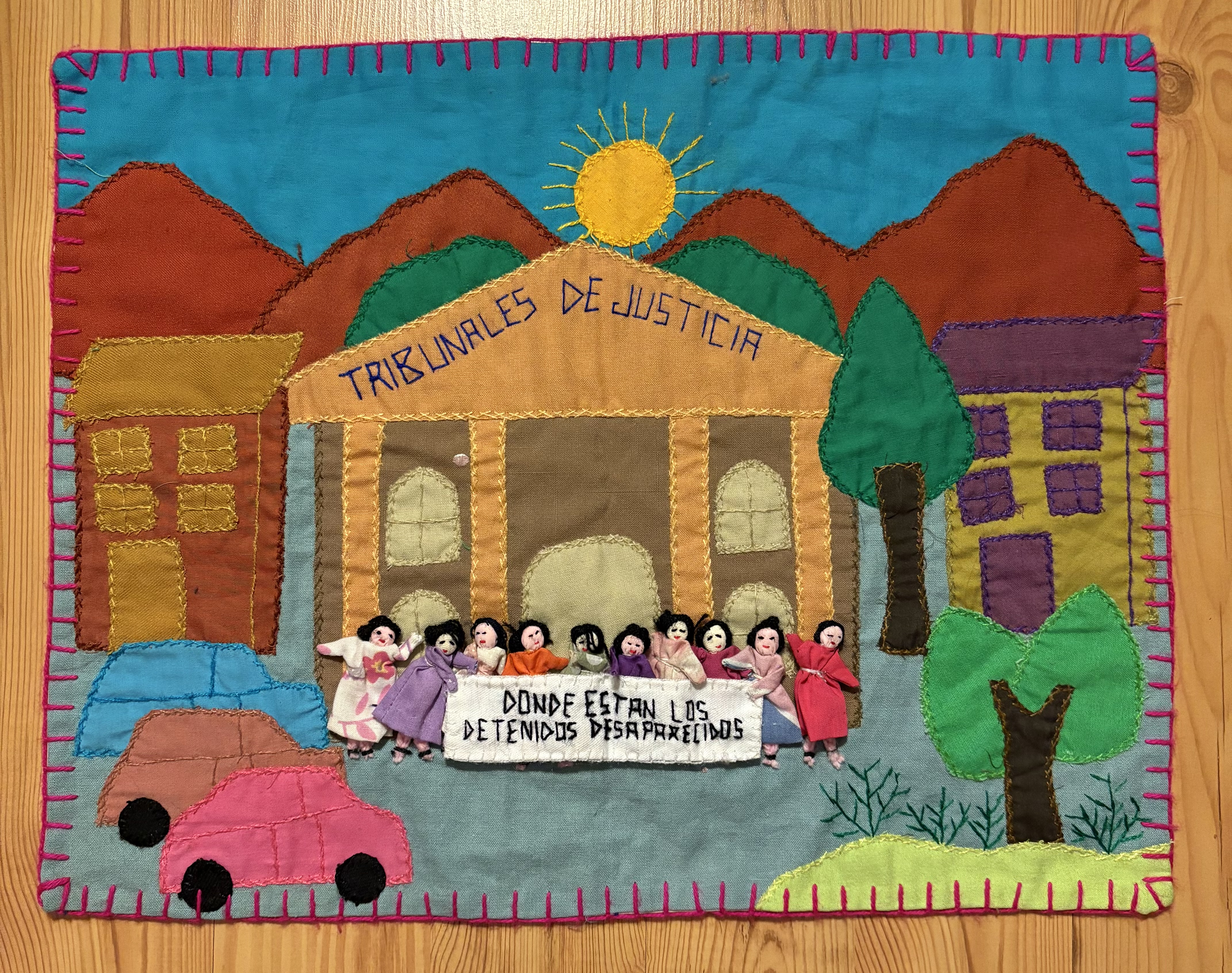
I’m so happy I got to read this book and get to know Libertad. It reminded me of this arpillera my mom bought in the early 90s, from someone who was selling them to raise awareness and funds for The Disappeared in Chile, under the rule of Pinochet. To talk about these topics and explain them, as difficult as they are, is a form of protest. You can read this book, “Libertad,” both for enjoyment, because it is a good story, but also as a way to keep the idea alive that maybe a better world is possible. Maybe. I highly recommend it. Let me know if you read it, there is a lot to discuss.