
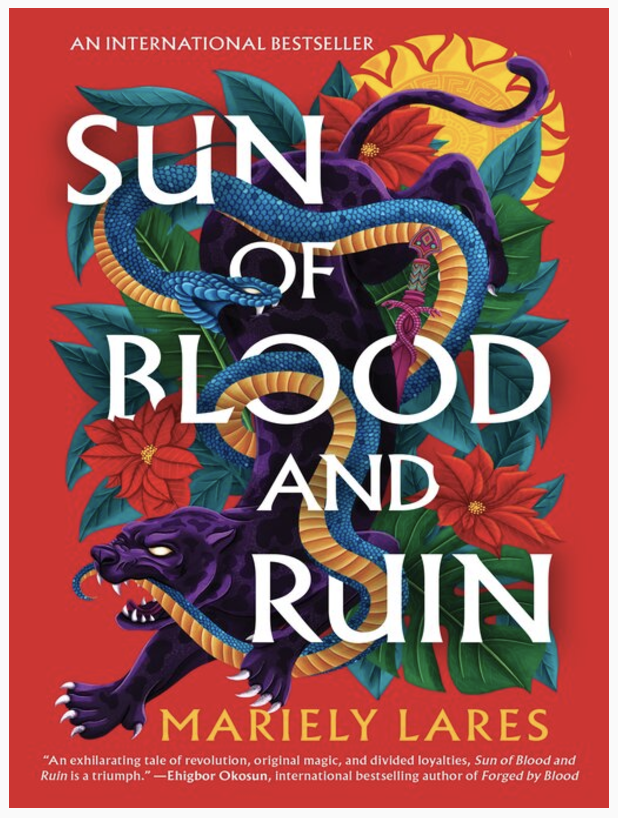
I enjoyed reading this book, though I usually don’t read much fantasy. This was a quick and fun read, a gender-flipped re-telling of Zorro. It is written in first person, telling the story of Leonora/Tecuani, who believes her father is a Spanish noble and her mother is an Indigenous woman of the Nahual people of Mexico. She presents herself to Spanish society as Leonora, but also wears a disguise and fights against the conquering Spanish as “Pantera.” Her true Nahua name is Tecuani. Although she doesn’t always do this, she is able to physically shift into the actual form of a panther as well. She is fluent in Nuhuatl as well as Spanish. This book follows her trials as she fights for the rights of the indigenous peoples of pre-Cortes Mexico and goes on a journey of self-discovery, meeting and falling in love with a Andrés/Tezca, with whom she shares more in common than she realizes.
There’s a lot to like about this book. My favorite part of this book was the care the author took to tell this story from an indigenous perspective. I am of Cuban heritage, but my mother studied Mexican folklore and I majored in Spanish at the University of Kentucky, so I have had opportunities to learn about the history and culture of Mexico, though it was not my emphasis. It always intrigued me. This past year I was lucky enough to visit Mexico City and went museums and historical sites. I loved having the opportunity to learn more about this beautiful country.


I wish I had been reading this book during my trip, because it would have enhanced my experience and I would have made so many more connections. Ms. Lares takes care to show a more true reflection of Mexico’s past. The indigenous peoples of Mexico are often described as being almost one dimensional, defined by what they are not, without exploring the intricacies of their beliefs, religion, language, society, and culture. That was not the case with this book. My favorite thing is when I am reading and I am learning something at the same time, which is what happened as I followed Leonora/Tecuani on her journey of self-discovery and also navigating her relationship with others during a really difficult period of time. At the beginning of the book, you are immediately introduced to the Nahua’s concept of tonalli, or life force. Here is a link to Wikipedia to get a quick definition. As the story progresses, the reader is constantly learning more like this.
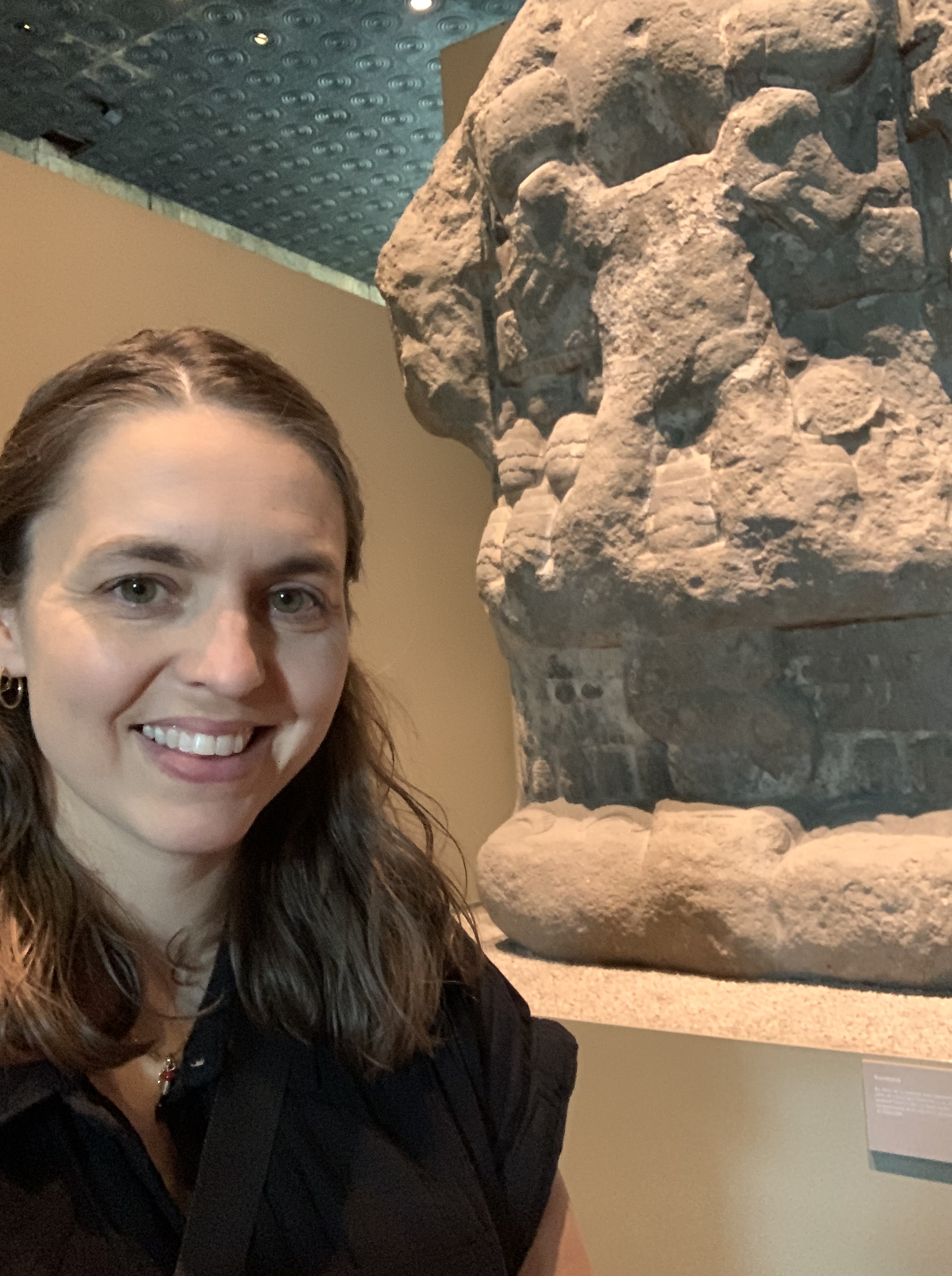
Above I have a picture of me and remnants of a statue of Yolotlicue, which may be related to Coatlicue, who is described as “the Mother of the deities, Goddess of fertility, patroness of life and death, and guide of rebirth.” This book goes into detail to describe many of the ancient gods and goddesses and depict what it would be like for indigenous peoples worshipping these gods, at odds with Christianity being imposed upon them. How did they feel? What were they fighting for? How will they persevere and preserve their way of life? Leonora/Tecuani is searching to answer these questions. That story line alone could take up the whole book, but there is more.
I enjoyed Leonora’s relationship with female characters in the book, both Inés and Amalia, but especially Inés. Her friends and enemies-turned-friends storylines were just as interesting, if not more so, than the story of her falling in love with Andrés/Tezca. I liked the truth in Leonora/Tecuani’s actions, when she defends her Spanish brother when he is being attacked by indigenous warriors. Also, her relationships with Prince Felipe and Amalia didn’t go as I expected. There is so much happening all the time! Those kinds of complicated relationships ring true to how people behave in life and made her story and perspective more real and compelling.
Overall, this book was an enjoyable read and I’m excited that it’s only Book 1 of a series! Let me know your thoughts or if you have read it.
 Silvia Gisela